Not all paint protection films are made the same. The base material decides how clear the film looks, how well it stretches, whether it self-heals, whether it yellows and how long it lasts. Here is how the three most common material families compare.
TPU — thermoplastic polyurethane
TPU is the material of choice for premium PPF. It is highly elastic, optically clear and compatible with self-healing top coats. Aliphatic TPU grades are especially resistant to yellowing under UV light. TPU stretches around complex curves and absorbs impact energy well, which makes it the best all-round option for daily drivers and luxury vehicles alike.
PCU — paint protection urethane
PCU films are urethane constructions focused on toughness. Their priority is high resistance to stone chips and debris, which makes them a strong option for the most exposed panels — front bumpers, leading edges, rocker panels — and for performance and racing vehicles that see high speeds or track use.
PVC — polyvinyl chloride
PVC is the oldest and cheapest film technology. It is stiffer, less clear and does not self-heal. Plasticizers in PVC can migrate over time, which can cause the film to harden, crack and turn yellow. PVC is generally considered an entry-level option and is not used in WIKA films.
Side-by-side comparison
| Property | TPU | PCU | PVC |
|---|---|---|---|
| Optical clarity | Excellent | Very good | Fair |
| Self-healing | Yes (with top coat) | Yes (heat repair) | No |
| Yellowing resistance | Excellent (aliphatic) | Very good | Poor |
| Flexibility / conformability | Excellent | Good | Limited |
| Stone-chip resistance | Very good | Excellent | Fair |
| Typical use | Full body & daily drivers | High-impact & performance | Budget / short-term |
It’s about the whole construction
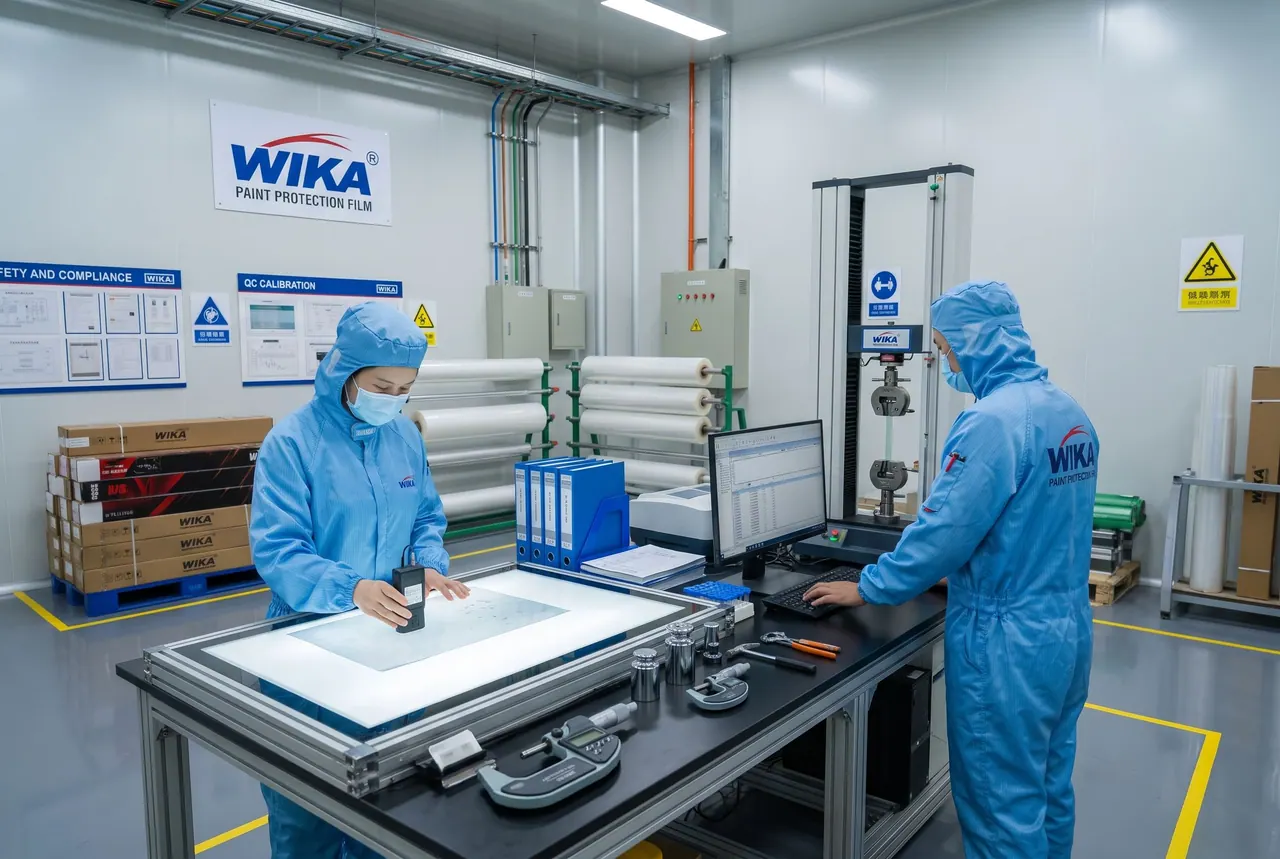
Material name alone does not guarantee performance. Top-coat chemistry, adhesive quality, thickness consistency and manufacturing control all matter just as much. That is why WIKA PPF verifies raw materials, measures thickness and adhesion, and keeps retained samples for every production batch.